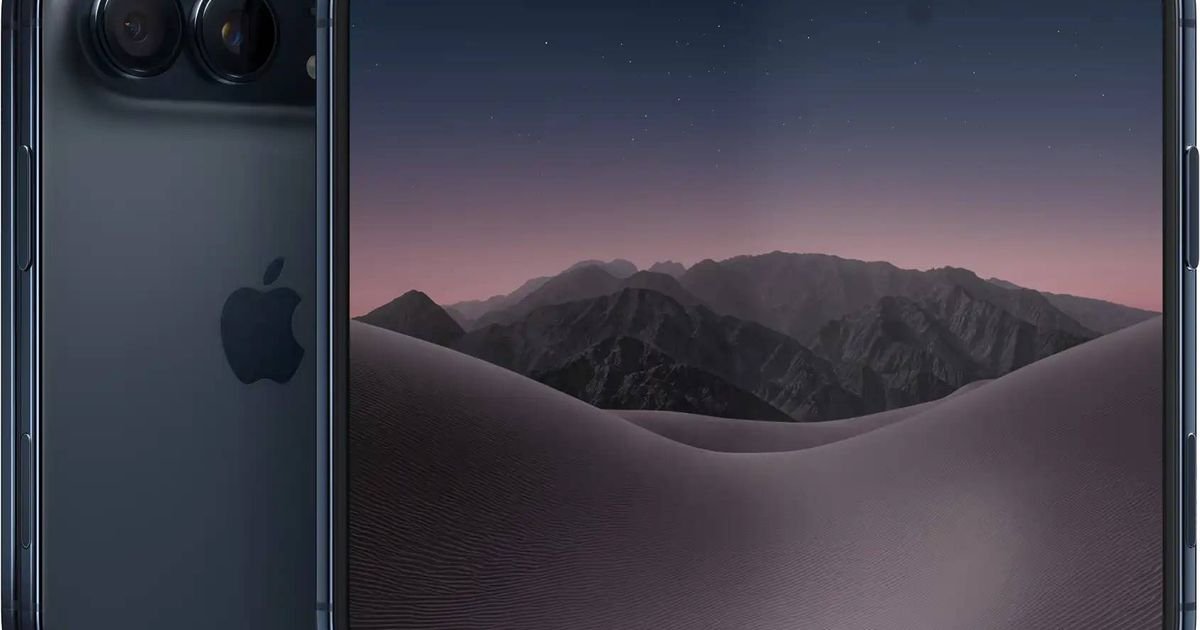
iPhone Duo has a large internal display, but the software does not always use its capabilities yet. A comparison with Huawei’s foldable smartphones showed that some popular applications on Apple devices open in narrow windows with wide black bars on the sides. At the same time, Huawei smartphones more often use additional screen space for multi-column interfaces and the simultaneous display of several sections. The comparison was published on Weibo after the iPhone Duo went on sale in China on October 23. It drew attention to a problem that could be one of the main challenges for Apple’s first foldable smartphone: a large display requires appropriate software support.
iPhone Duo does not yet reveal the full potential of the large screen
Chinese tech blogger Wu Xiaojie WJie tested several popular applications on the iPhone Duo and foldable smartphones Huawei. According to Sina, Huawei devices displayed interfaces with multiple columns and split regions, using the width of the internal screen. On the iPhone Duo, the results were different. Some applications opened in narrow vertical windows in the middle of the display. Large empty areas remained on the sides. The reviewer also pointed out issues with the Dock’s layout. Because of this, the 7.6-inch screen does not always give the expected advantage. Instead of a larger workspace, the user gets an interface designed for a regular smartphone, only on a much larger panel.
Huawei offers several formats of wide displays
In the family Huawei Pura X there are devices with different screen formats. The basic Pura X is equipped with a 6.3-inch internal display and a 3.5-inch external screen. The larger Pura X Max uses a 7.7-inch inner panel and a 5.4-inch outer one.
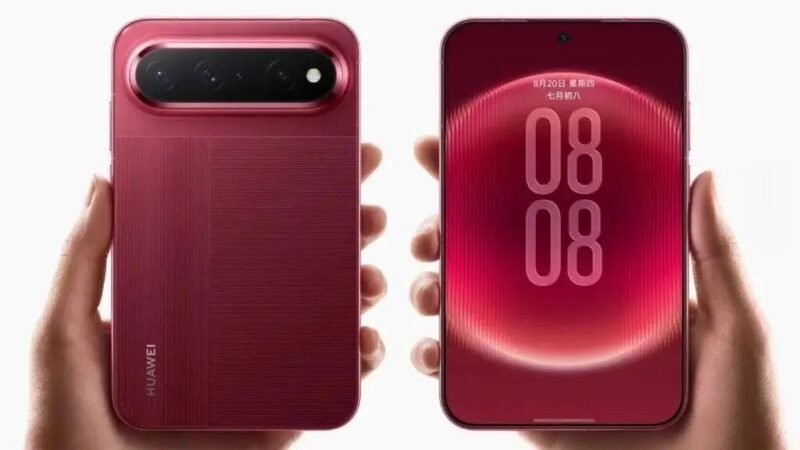
Pura X View stands out. This is not a folding smartphone, but a regular phone with a wide 6.39-inch display. Its unusual aspect ratio of 16:9.5 brings the screen format closer to a small tablet. This approach shows that Huawei is experimenting with wide displays not only in foldable devices. At the same time, the comparison does not prove that each application works perfectly on all models of the company. It just shows that in some scenarios, Huawei’s software adaptation makes better use of the available screen space.
Apple requires app updates from developers
Apple has already explained why some apps don’t take up the full area of the iPhone Duo’s internal display. Applications created with older development tools may run in a central window, leaving empty space around it. For full adaptation, developers need to use newer Apple tools. Apps built using the iOS 27 SDK can resize to fit a larger display area. Full support, including adaptation of navigation and interface elements, requires iOS 27.1 SDK. Some developers have already started adding support. According to the results of the first reviews, some of the popular programs received updates around the time the smartphone went on sale. However, many applications still need additional work.

iPhone Duo software still needs to be refined
Comparison with Huawei does not mean that the iPhone Duo is generally inferior to the competition or has problems with the hardware part. The test is specifically about the adaptation of applications to the large internal display, not processor performance, battery life or screen quality. Apple is entering the foldable smartphone market with a new format for its ecosystem. Developers need time to adapt programs to it. Therefore, the quality of the experience of using the iPhone Duo will depend not only on Apple itself, but also on the speed of third-party software updates. So far, the main takeaway is simple: a large display alone does not guarantee an advantage. For it to truly replace a compact tablet, apps need to take advantage of its width and extra space, rather than simply scaling a regular phone interface.