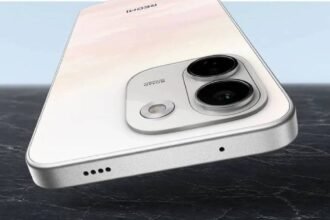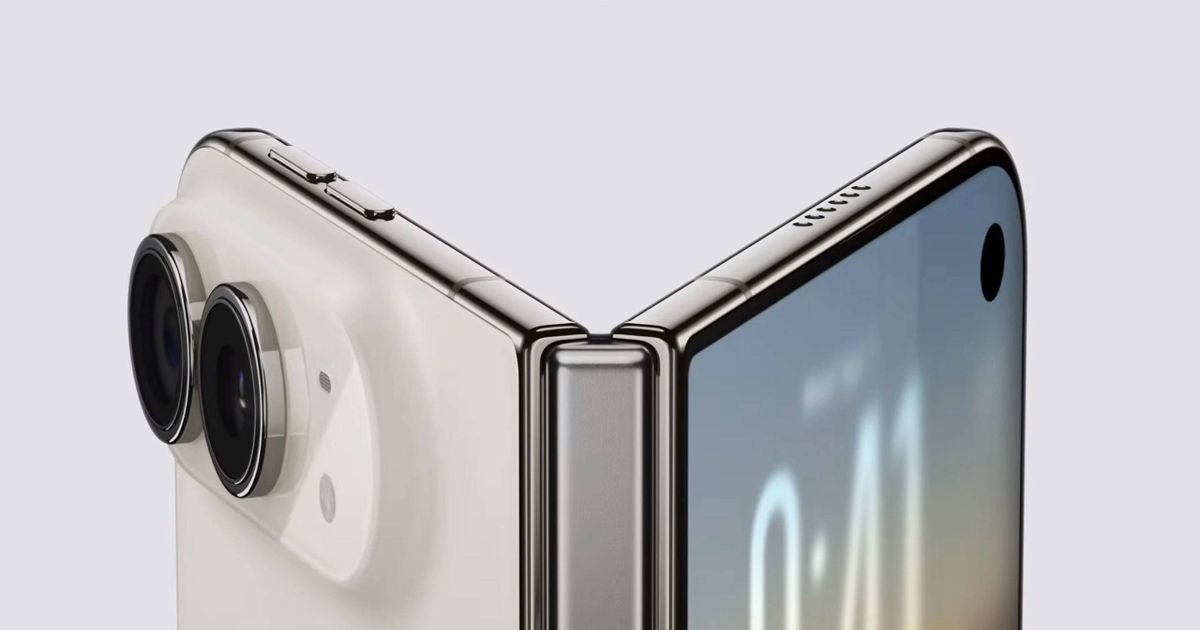
Folding iPhone Duo endured already 457,053 compilation during the test CNET, and the internal display still hasn’t cracked. However, the folding mechanism shows signs of wear: the hinge has become noticeably looser, and its operation is no longer as tight as at the beginning of the test. Smartphone continues to work, but the results show that the durability of the hinge may be a weak point of the design. CNET’s test lasted 15 days of live broadcasts and ended the next phase on November 13. To check, the editors created a special machine in a laboratory in Louisville, Kentucky. She folds and unfolds the smartphone approximately 900 times per hour — about 20,000 cycles per day.

How many folds did the iPhone Duo withstand?
The test counter quickly crossed several important marks. Around October 31, the smartphone overcame 139,000 folds, on November 5 — 281,000, and by November 13, the result had increased to 457,053 cycles. During this time, the internal screen remained intact. A crack did not appear on it, although the hinge gradually lost its initial stiffness. CNET noted noticeable mechanism wear and play. This is an important result for a folding smartphone, because the display and the hinge are among the most loaded components of such a design. At the same time, the results do not mean that each instance of the iPhone Duo will necessarily withstand the same number of cycles. If we conventionally count 30 folds per day, 457 thousand cycles correspond to more than 40 years of use. But the laboratory test does not reproduce all conditions of everyday operation: dust in pockets, accidental shocks, temperature changes and uneven load.
Other tests of the iPhone Duo showed different results
CNET’s result is inconsistent with all other tests. Polish YouTube blogger Kuba Klawiter assembled the smartphone manuallyand the display cracked at the mark 75,001 assembly. His test also involved dust and low temperatures. JerryRigEverything also conducted his devastating test. It also reported hinge and screen issues. At the same time, Joanna Stern’s robotic test ended much better: her device survived 32,640 compounds without noticeable changes in the operation of the hinge. Individual owners also published photos of cracks near the hinge already in the first days after the start of sales. However, such reports cannot be equated with controlled tests: it is not known under what conditions the smartphones were used and what exactly caused the damage. For comparison, Samsung stated that the Galaxy Z Fold 6 is designed for 200,000 folds. However, direct comparison of results from different manufacturers and laboratories requires caution, as testing methods may differ.
Does the crease on the iPhone Duo display change?
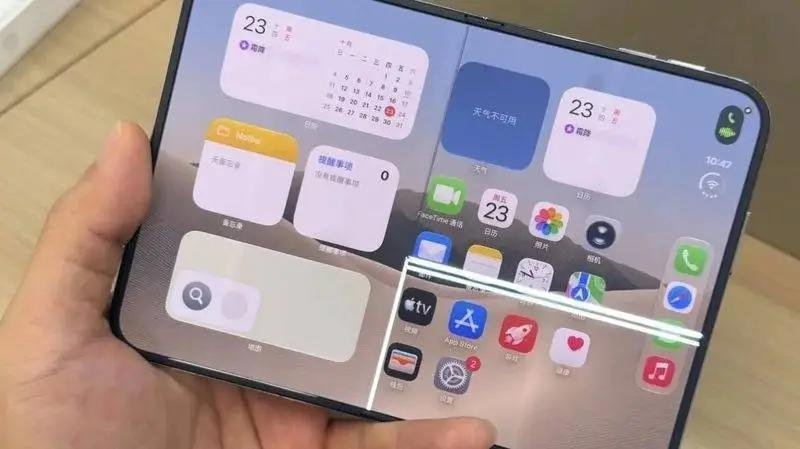
The results regarding the visibility of the fold on the inner screen also remain ambiguous. CNET reported that after 139,000 cycles, it looked about the same as it did at the start of the test. Another test showed that the crease became much more noticeable after 10,000 folds. The tracker, shared by an Ice Universe insider, also indicates a gradual intensification of the crease, with it becoming noticeable around day seven and increasing in severity by day 14. Differences may be explained by different conditions and methods of assessment. The machine folds the smartphone evenly and in a controlled environment. In real life, the device is constantly in contact with dust, pocket tissue, bag surfaces and other sources of contamination.
Can you trust the durability of the iPhone Duo?
CNET’s result suggests that the iPhone Duo’s internal display can withstand a very large number of assembly cycles under controlled conditions. For a smartphone costing close to $1999 this is an important indicator. However, the wear of the hinge after hundreds of thousands of cycles reminds us that the strength of the screen is only part of the overall reliability of the folding device. Even if the display remains intact, backlash in the mechanism can affect the feel during use and the subsequent durability of the design. So far there is no reason to draw final conclusions. CNET continues to test, so the following results may change the big picture. For buyers, the main conclusion for now is this: the laboratory test shows the high stability of the screen, but the durability of the hinge remains a separate issue.